Coffee ABC - K is for Kaldi
Have you ever wondered where coffee comes from and who discovered coffee? Under which circumstances was it discovered? And what happened then?
Well, let's take you on a journey into the realm of myth, legend and lore in which we'll uncover the reason why you'll find goats again and again in the corporate identity of many a coffee company. And you'll also have a new perspective on some terms you'll come across in the coffee world.
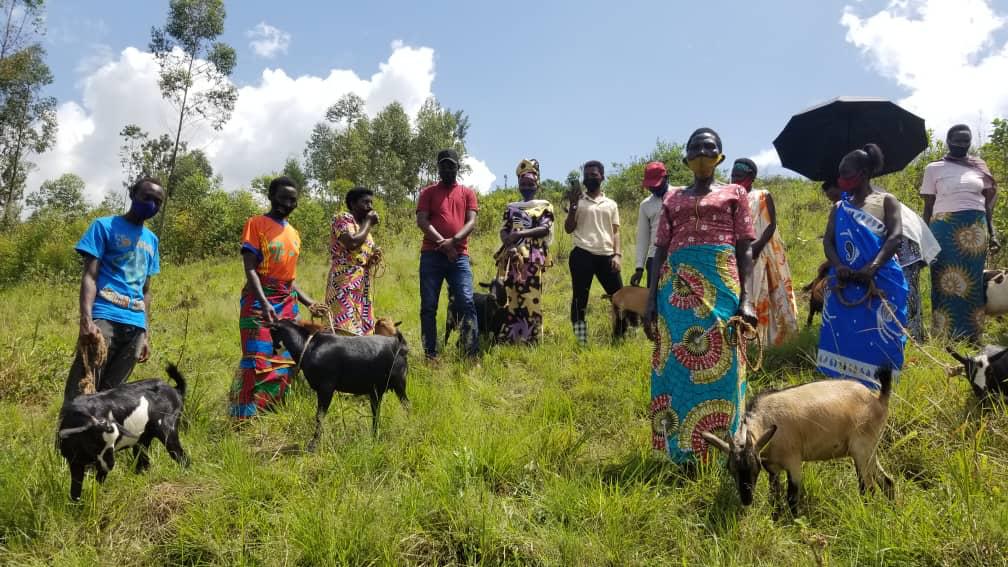
As we already established in the first post of our Coffee ABC series (A for Arabica), coffee is endemic - meaning it originated and has grown "wild" - to Ethiopia, so it makes sense that coffee also was discovered there. But that is about where the confirmed facts end and we cross over into coffee lore: Legend has it that Kaldi, a 9th century goat herder in Ethiopia noticed that his goats were nibbling on a bush and eating the red berries which grew on said bush. After ingesting the berries, the goats got properly agitated and energetic, dancing around wildly. Intrigued by this behaviour, Kaldi tried the berries himself and while finding them utterly bitter and inedible still felt a rush of energy and vitality.
Kaldi brought some berries to a nearby monastery to spread the word about his discovery of the energizing fruit. The monks however disapproved of his discovery and linked the effects to demons or evil spirits. Thus the berries were disposed of by throwing them into a fire. The burning of the berries caused an exquisite aroma to spread which couldn't be ignored. And so the embers were pulled from the fire and quenched with water to preserve the smell. Upon drinking the water, the monks experienced a calming sensation while gaining an ongoing focus and alertness. This sealed the fate of coffee and the exquisite and energizing properties began to fascinate the folks of the region as well as quickly spreading across the Arab lands.
Now we're back in the space of confirmed facts (well, mostly): Coffee obviously became a thing first in Ethiopia (where ist still is a deeply integral part of the country's and people's culture and everyday life) but quickly spread across the red sea to the Arabian peninsula, the port of Mokha in Yemen becoming the main gateway and holding down a strict monopoly on the import of coffee beans.
As the Ottoman empire expanded to Europe throughout the 15th and 16th century, they brought their favourite beverage with them. They had named the beverage "qahwah" or "kahwa", after the Arabic word for wine - both drinks having a stimulating effect but wine effectively being prohibited under Islamic law. You have probably guessed that the word "coffee" stems from butchering the Arabic "kahwa".
So by the late 16th century (and the siege of Vienna), coffee was a known but still rare product in Europe and the Ottoman-Yemeni monopoly didn't facilitate coffee to establish itself as a beverage. Neither did several attempts at banning the drink, denouncing coffee for reasons of moral decay and fear of political rebellion.
Dutch tradespeople saw an opportunity in circumnavigating the Ottoman-Yemeni monopoly by smuggling a handful of coffee plants and cultivating them in their colony of the Dutch East Indies, also known as Java. The cultivation and trade thrived until a bad bout of leaf rust (a fungal disease affecting plants) hit in the late 1880ies, ending that era for a moment.
Meanwhile, the French had started to cultivate coffee of their own. The Dutch had actually gifted King Louis XIV (a member of the House of Bourbon, a prominent European royal dynasty) a coffee sapling from their colony in Java which the French tended to in the botanical gardens of Paris. In 1723, the French brought some fertile coffee seeds from their plant in Paris to Martinique in the Caribbean and started their own coffee cultivation. The Portuguese, who were ruling the territory of today's Brazil as their colony, needed to settle a border dispute over French Guyana with the French in 1727. During the diplomatic visit, a Portuguese lieutenant is said to have charmed the wife of the local French governor who secretly gave him a handful of coffee seeds hidden in a bouquet of flowers. That paved the way for the cultivation of coffee in Brazil.
OK, if you've attentively read the entire post, you've picked up at least five bingo-card-coffee terms or things you'll come across in the modern day coffee world and roasteries. Can you name them? If yes, you can let out a very loud BINGO!