
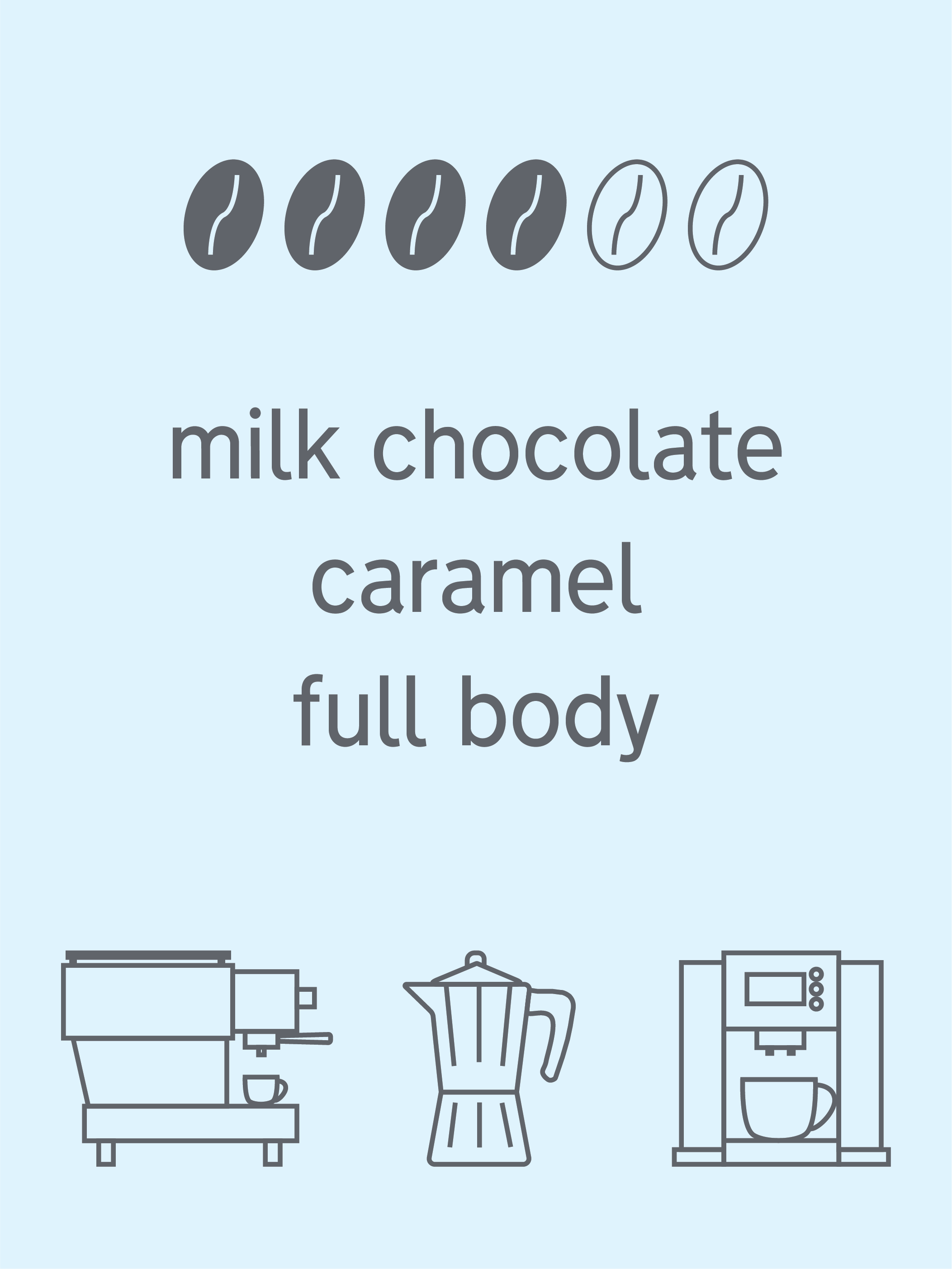
our preferred extraction
for a double shot, aim for 19 g in / 45 g out in 30 seconds with water temperature at 93 °C and adjust from there to meet your taste
More about this coffee
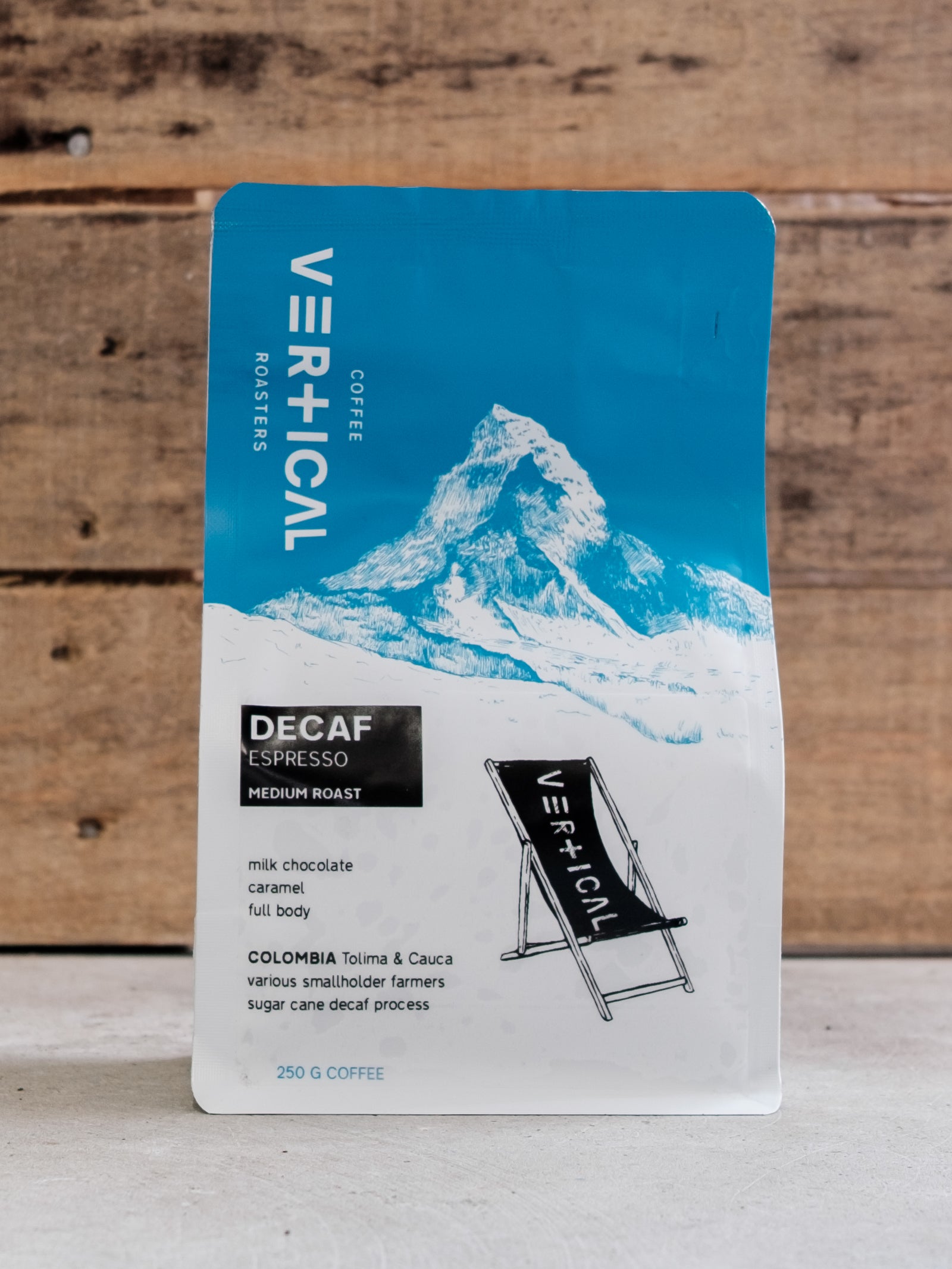
Origin: Colombia, Tolima & Cauca
Producer: various smallholder farmers
Varietals: various
Altitude: 1400-2100 masl
Processing: sugar cane process for decaffeination
Sourced through Sucafina Specialty
No matter what your reason is to drink decaf coffee - no judgment - you deserve an option that is tasty, natural and sustainable.
This coffee comes from the Tolima and Cauca regions of Colombia featuring various small producers that work together with Sucafina Colombia. It is decaffeinated using the so called "sugar cane process".
The sugar cane process uses a naturally occuring compound - ethyl acetate (EA) - as a solvent for decaffeination. Ethyl acetate is a natural component of ripe fruit - in our case here it is sugar cane. The EA is derived from the fermented sugar cane molasses and it is an excellent selective caffeine extractor.
Like all decaffeination processes, the sugar cane process also starts with treating the green beans with steam to open up the membranes. The beans then are immersed in a solution of ethyl acetate which selectively extracts the caffeine. To extract all caffeine (down to a content of 0.01% residual caffeine, it is necessary to repeat the immersion several times, filtering the ethyl acetate from caffeine and re-using it over and over again. When the desired caffeine level has been reached, the green beans are dried a second time.
The whole decaffeination process changes the way the green coffee looks and also how it behaves. It actually isn't the same green color as other green coffee. Depending on the type of decaffeination process, it can be anywhere from dark green and a bit glossy to brown. The roasting itself is pretty straightforward though and we don't need to change a huge amount in our approach.
Treating the green beans with steam and opening up the its membranes facilitates the lipids / oils - which are normally enclosed in the beans - to reach the surface. That's why (roasted) decaf beans tend to be oily quicker, independent of the roast level.
Also due to the altered membrane structure of the decaffeinated coffee, the extraction behaviour changes more significally: When using pressure in your preparation method (like an espresso machine), you will find that the coffee flows rather fast and you will need to dial down the grind size to a very fine one.
We roast our decaf to a medium roast, making it perfect for preparation with an epresso machine or stovetop / Bialetti. If you'd like to brew it as a pourover or in an AeroPress, simply reduce the water temperature (try 85°C or even 80°C) for a tasty cup of coffee - without the buzz.
In case you were wondering: The extracted caffeine from the decaffeination process is re-purposed in things like caffeine pills, energy gels or other artificially caffeinated products and beverages.
If you'd like to dive (even) deeper into the topic of decaf coffee, we'd recommend you give this blogpost a read.