

our preferred extraction
for a double shot, aim for 19 g in / 40 g out in 25 seconds with water temperature at 93 °C and adjust from there to meet your taste
More about this coffee
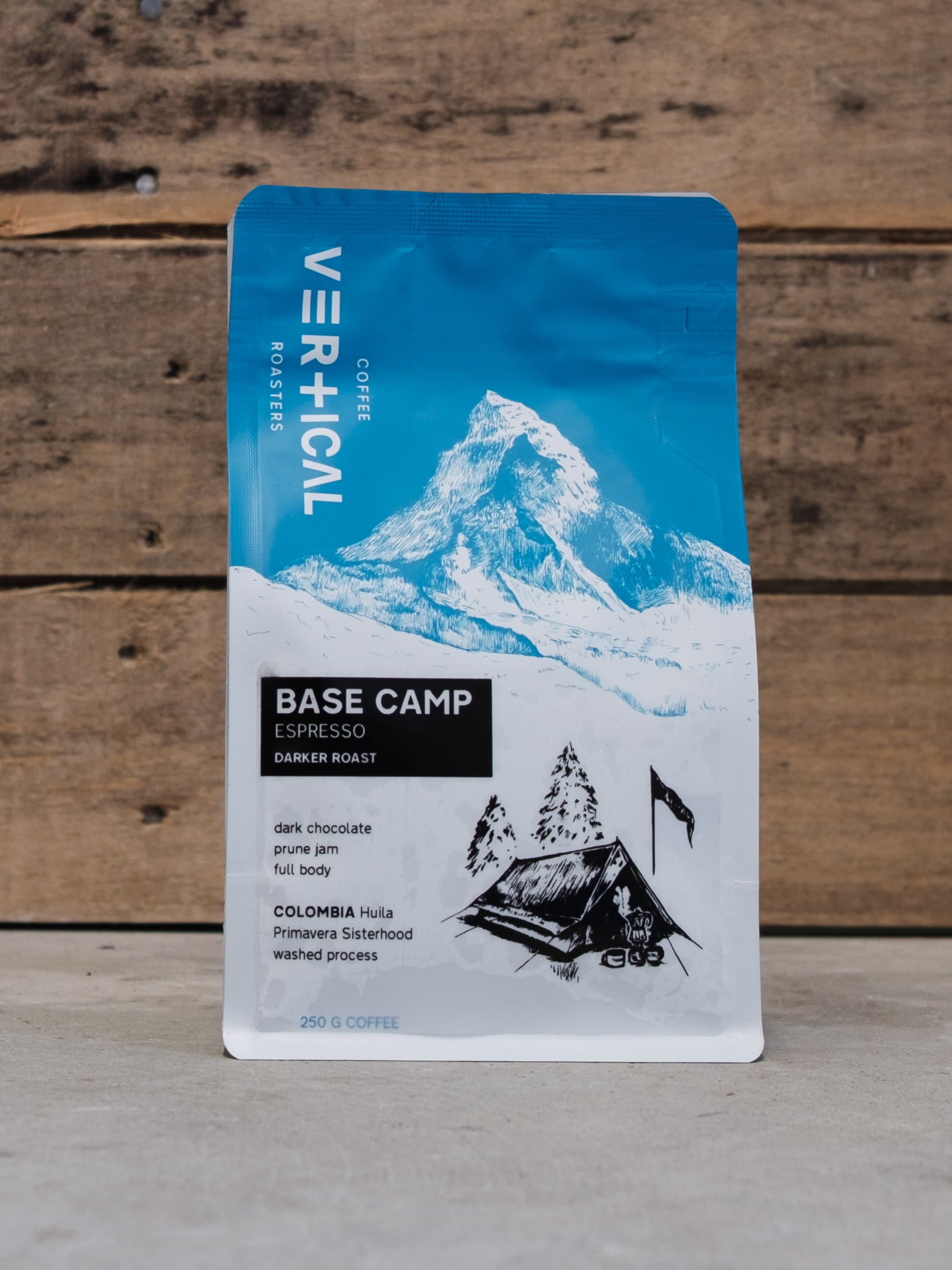
This is the darkest roast in our portfolio. It's for everyone who likes a more developed, full bodied and intense espresso with those dark chocolate flavour notes balanced by enough sweetness (think sticky prune jam) to give you a long lasting, lingering aftertaste.
Base Camp Espresso is your happy place: where you make plans for future adventures over a flat white, where you down that boosting espresso for an extra caffeine kick before heading out, where you fire up the camping-stove and brew a simple Bialetti to enjoy with your friends while sharing some good stories.
The beans for this coffee will be changing over the seasons and it right now we're using a regional blend from Huila, Colombia produced by women smallholder farmers with full traceability to farm level.
If you'd like to know more, read on below.
Origin: Garzón, Gigante, Agrado, El Pital, Tarqui, Suaza and Guadalupe, Region Huila, Colombia
Producers: women smallholder farmers of the Coocentral Cooperative
Varietals: Colombia, Castillo, Caturra
Altitude: 1800 masl
Processing: fully washed & dried on raised beds
Sourced through Primavera Green Coffee
Gender equity is a longstanding challenge for the coffee industry; women coffee growers have less access to land, credit, training, and basic education even as women make key contributions to plant care, harvest, and processing coffee. Research has shown that when women are empowered to make decisions, including financial decisions about their coffee farms, families and community are more successful and their needs are better met. Extra funds for this coffee go to putting on workshops for women producers.
Primavera's partner cooperative in Huila, Colombia - Coocentral - works to improve and differentiate women's coffee among their membership. They run specific programs to empower and educate women in leadership, farm management, productivity and quality as well as providing better infrastructure like raised drying beds.
The cooperative also guarantees direct trade for their coffee with a differentiated price so that women that belong to the project have received up to 20% more than the market average price for their product. As members of a cooperative, they can lean on the collective strength for access to knowledge and networks, negotiation and marketing.
Colombia is the world's second largest producer of arabica coffee accounting for roughly 8% (far behind Brazil who produces around 40%) and has a history of producing high quality beans cherished the world over.
Due to the topography of the growing regions, coffee cultivation in Colombia is still very much a labor intensive, manual trade mainly practiced by smallholder farmers. The remoteness of the regions requires the producers to process their coffee directly at the farm, which gives them control over quality but calls for a well developed skillset.